
The tabla drum. Respected by all percussionists with regards to its tone and the speed at which it’s played. Learning the art to produce its sounds have traditionally been passed down verbally through generations.
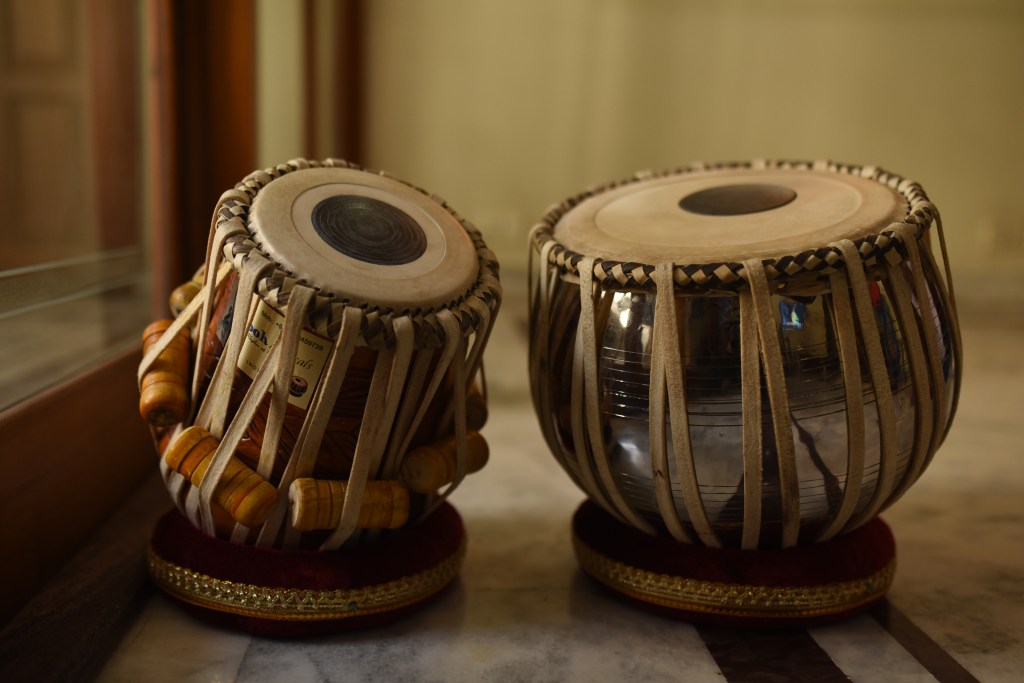
Tabla – (pictured above) a pair of hand drums; a bass drum(referred to as the bayan) and a treble drum (the dayan, also singularly referred to as tabla)

How we sit
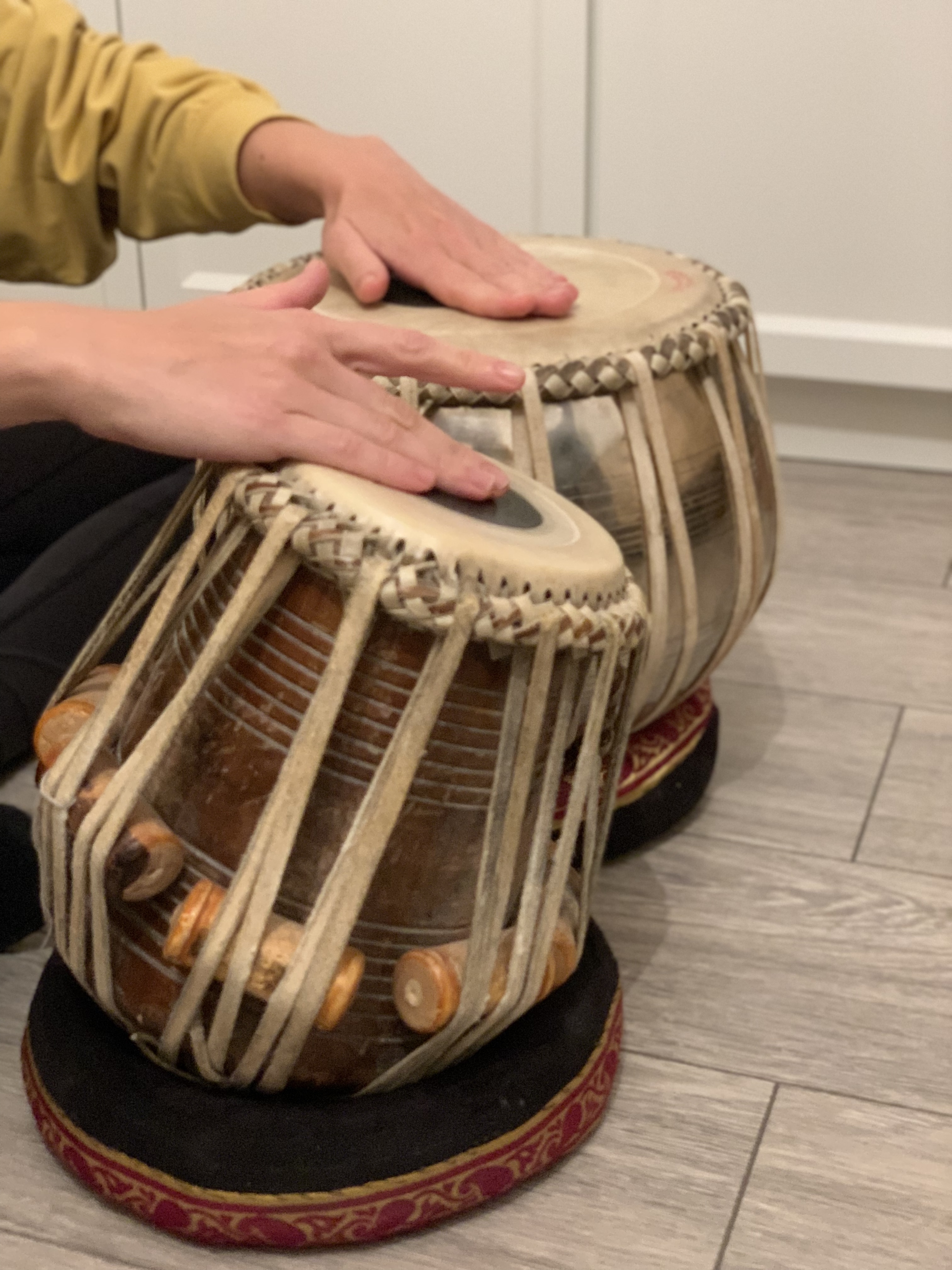
(pictured left) Tabla is played sitting on the floor with the drums resting on ‘beeras’ (rings).
Practicing the instrument requires one to be in a comfortable position, whilst being able to apply downwards pressure on the bayan.
Traditionally, we sit with our legs folded to keep our back straight and also as a mark of respect, so there are no outstretched feet facing the front.
If you have any questions about being able to sit comfortably with your tabla, please get in touch and we will find a simple solution that suits you.
Use our finger tips
Tabla is a hand drum and we use our fingertips to apply pressure and produce sounds. (pictured left)
Contrary to common belief, playing the tabla is not painful and will not ruin your skin. The surface of the tabla is made of skin (goat) and the light pressure needed will keep your hands soft and supple.

Maestros
Indian classical music is taught in an oral tradition and performed in an improvised fashion. As the sarod maestro Ustad Amjad Ali Khan said once: “Just as tying a turban or cooking a dish can never be exactly repeated, neither can our music’. As each Guru and maestro continues to explore the nuances, their emotions lead to new compositions and new grooves. Listening to senior artists, therefore, goes hand in hand with learning the musical system.
Pictured right Pt Rajkumar Misra
Tabla’s place in the world of music
Exploring rhythms synonymous with the history of Indian culture, the tabla is the most used instrument for percussion accompaniment in India today. From Bollywood rhythms to Khayal singing, the tabla is the favourite.
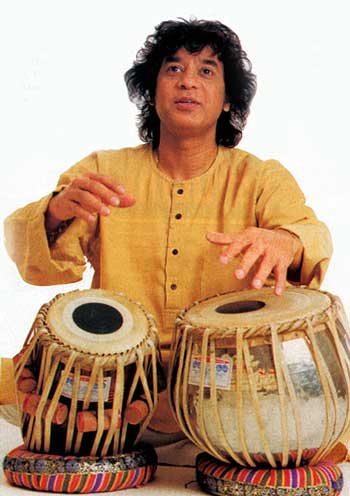
The tabla’s intricacies have allowed exponents to adapt its sound to all rhythm landscapes. The most illustrious modern-day exponent, Ustad Zakir Hussain, has illustrated how the sounds can be utilised in music from an array of countries around the world.
Ustad Zakir Hussain (photo from Drummerworld)
 Tabla with Dips